Index
Top 3 Alternatives of Agfa HealthCare for Deep EMR Integrations
The full set of essays and reference pages, in the order they are best read.
Most medical imaging teams hit integration limits once their EMR vendor restricts API calls or vendor support ends. Some tools cap daily transactions or force on-premise servers, leaving gaps in day-to-day workflows. The need to maintain fast image retrieval without new hardware spending drives many practices to re-evaluate options this year.
By the final page you will know which three vendors offer the deepest EMR integration, how each handles cloud versus on-prem storage, and what transaction volumes they support. You will also see a direct comparison of integration features and a clear ranking that places Medicai first for teams that need zero-footprint access and flexible cloud PACS without extra servers.
What to Look For in Deep EMR Integration Solutions
Deep EMR integration requires specific standards and protocols that let imaging data flow directly into existing clinical workflows.
Hospitals evaluating vendors must examine four core technical criteria. HL7 FHIR APIs stand at the top of any checklist. These interfaces allow modern applications to read and write patient records without custom scripts.
One example shows a radiology department pulling medication lists directly into its image viewer using FHIR queries. The second criterion involves IHE XDS-I profiles. These profiles define how imaging documents move between different systems.
A typical installation uses the cross-enterprise document sharing profile to exchange chest CT studies between a remote imaging center and the central health information system. Real-time image push and pull forms the third requirement.
This capability removes delays that occur when scans sit in a queue before reaching the electronic health record. For instance, an emergency room workstation can display a trauma series within seconds of acquisition because the PACS sends images immediately after completion.
The final criterion is patient data mapping without middleware. Direct mapping ensures that demographic fields, order numbers, and accession identifiers stay consistent across the imaging archive and the record system.
Staff avoid manual matching when a new patient arrives from an external clinic because the integration engine reads the incoming HL7 message and places the correct identifiers automatically.
1. Medicai - Best Overall
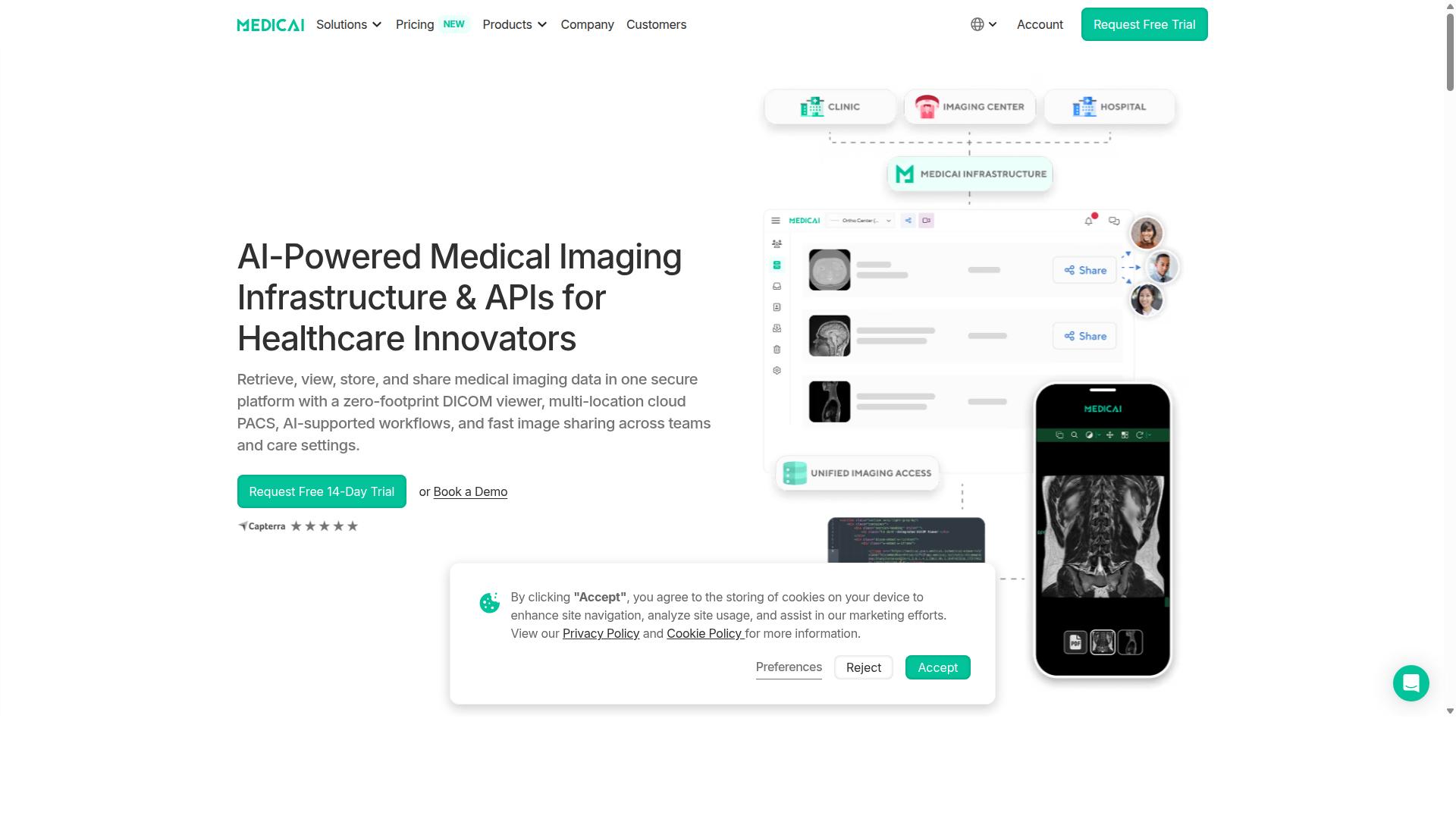
Medicai delivers the strongest combination of cloud scalability, zero-footprint viewing, and native EMR connectivity. These capabilities position it ahead of traditional vendors in scenarios that require deep EMR integration.
The platform serves as a complete imaging infrastructure solution. It combines cloud storage, image viewing, and structured reporting without requiring legacy system maintenance.
EMR Integration Capabilities
Direct EMR connections are established via HL7 FHIR APIs, CDA templates, and CCD exchange without additional interface engines.
Automatic study push delivers new imaging studies directly to the patient chart. This eliminates manual file transfers and reduces delays in clinical documentation.
Single-sign-on launch allows clinicians to open the zero-footprint viewer from within the electronic health record. No separate login credentials are required for imaging access.
Bidirectional report write-back sends structured radiology findings back to the EMR. This keeps patient records complete and supports clinical decision support systems.
Cloud PACS and Storage Options
Storage starts at 500 GB and scales to multi-terabyte configurations, all hosted on HIPAA-compliant, geographically distributed servers.
| Tier | Monthly Cost | Storage Limit | Connected Locations | User Accounts |
|---|---|---|---|---|
| Starter | $249 | 500 GB | None | Unlimited |
| Standard | $749 | 2 TB | One | Unlimited |
The Enterprise tier supports custom storage volumes and multiple connected locations. This tier fits larger health systems that require vendor-neutral archive capabilities across several facilities.
API Transaction Volume
The platform processes more than 50 million API calls per year, supporting real-time queries from hospital information systems.
This transaction capacity handles peak radiology exam volumes without throttling. Hospital information systems maintain consistent access to imaging data throughout high-demand periods.
High API throughput supports longitudinal record building. Patient imaging histories remain accessible across multiple care settings and time periods.
2. Sectra
Sectra offers on-premise and cloud-hosted PACS with flexible deployment, but requires additional modules for deep EMR connectivity.
Many hospitals evaluate this vendor when seeking an alternative to Agfa HealthCare for enterprise imaging. The platform supports radiology, pathology, and cardiology workflows across thousands of sites worldwide.
Organizations often pair Sectra with existing health information system environments. This combination may address immediate imaging needs while leaving deeper clinical data exchange for later phases of the project.
EMR Integration Capabilities
Integration relies on HL7 v2 messages and optional FHIR endpoints that may require third-party interface engines.
Common EMR modules used by Sectra customers include HL7 order and result interfaces. These connections handle basic scheduling, reporting, and image access within the electronic health record.
Deeper EMR integration typically demands extra configuration steps. Teams often add middleware layers to map patient identifiers, manage longitudinal record updates, and route CDA documents between systems.
Experts recommend reviewing IHE profiles and structured reporting requirements before finalizing the design. Such planning helps ensure the imaging archive aligns with broader clinical decision support initiatives.
Deployment Models
Hospitals can choose fully on-premise appliances, hybrid cloud, or fully managed SaaS instances.
Each deployment model carries distinct infrastructure considerations. Fully on-premise setups place hardware and maintenance responsibilities directly with the hospital IT team.
Hybrid cloud options shift certain storage and processing tasks to external data centers. This approach may reduce local hardware demands while keeping sensitive image data under institutional control.
Fully managed SaaS instances move most operational duties to the vendor environment. Hospitals still need to confirm network connectivity, bandwidth, and security policies before committing to this route.
3. CARESTREAM Vue PACS
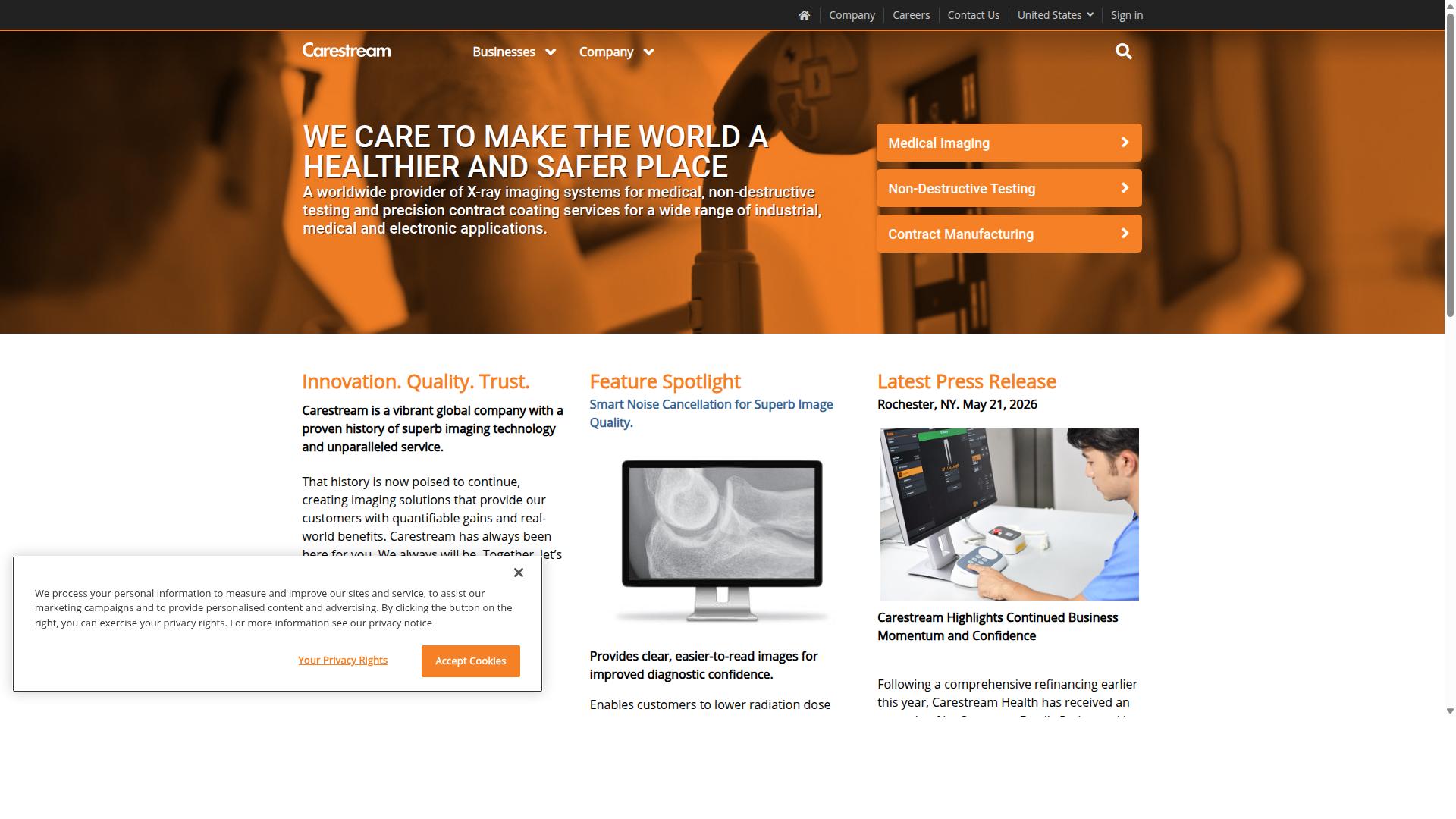
Carestream emphasizes diagnostic workstation performance and structured reporting, with EMR hooks available as optional extensions. This approach supports radiologists who need reliable tools for managing large imaging datasets. Many organizations choose Carestream as an alternative vendor when evaluating Agfa HealthCare replacements.
The platform provides 64-bit architecture that enhances processing power for complex analysis tasks. Voice recognition capabilities allow radiologists to insert hyperlinks and key images directly into reports. These features help maintain workflow continuity while supporting clinical decision support requirements.
Healthcare providers of all sizes can access reading, reporting, and advanced 3D processing tools through on-site or remote configurations. The system uses metadata indexing to access existing archives without requiring data migration service interventions. This capability appeals to facilities seeking to reduce operating costs while maintaining enterprise imaging standards.
EMR Integration Capabilities
Embedded viewers can launch from the EMR, but full data exchange often depends on Carestream proprietary interface engine. This architecture supports DICOM workflow and HL7 FHIR communications through the middleware layer. Organizations building deep EMR integration typically evaluate these connection points during vendor assessments.
The zero-footprint Vue Motion viewer enables remote access to 3-D and MPR images through EMR integration. Mobile devices can retrieve multimedia reports and non-DICOM content without additional client software. This approach supports image-enabled EMR initiatives while maintaining security protocols.
Native features can replace third-party integrations in certain scenarios. The integration engine handles patient data mapping between the PACS and electronic health record systems. Clinical data exchange becomes more streamlined when organizations align their health information system requirements with these capabilities.
Deployment Models
Options range from on-premise enterprise servers to vendor-hosted cloud environments. On-premise deployments provide direct control over radiology information system connectivity and data storage locations. Healthcare facilities often select this path when regulatory requirements mandate specific data residency policies.
Cloud environments require separate subscription tiers beyond base licensing. Vendor-hosted solutions can support longitudinal record access across multiple sites. Organizations evaluating deployment models typically consider their existing healthcare IT ecosystem infrastructure before making final decisions.
Both deployment paths maintain support for IHE profiles and CDA document standards. The choice between models often depends on existing API gateway infrastructure and technical staff availability. Healthcare providers weigh these factors when planning PACS replacement or vendor-neutral archive implementations.
How to Choose the Right Option
Selection should align with the institution's existing EMR, network capacity, and imaging volume. The evaluation process starts with understanding how each platform handles deep EMR integration requirements.
Four practical questions help narrow the field. First, what size hospital or imaging center needs support? Larger facilities typically require more robust interoperability platforms that manage high study volumes across multiple departments.
Second, which EMR vendor is currently deployed? Compatibility with existing electronic health record systems determines whether an alternative vendor can deliver seamless clinical data exchange without extensive customization.
Third, what study growth is expected over the next three to five years? Rising imaging demand affects whether the chosen solution can scale its DICOM workflow and maintain performance under increased load.
Fourth, what IT staffing levels are available for implementation and ongoing maintenance? Organizations with smaller teams benefit from platforms that reduce complexity around HL7 FHIR integration and patient data mapping.
Each answer points to specific product attributes worth comparing across the three alternatives. Hospitals should verify that any selected platform supports their current health information system and can accommodate future enterprise imaging needs. The right match balances technical requirements with operational constraints, ensuring sustainable deep EMR integration across the healthcare IT ecosystem.
Final Verdict
Institutions seeking a cloud-first, API-rich imaging platform with minimal on-premise hardware will find Medicai meets the majority of technical and compliance requirements.
The platform handles 50M+ yearly API transactions and stores 1.7M+ studies while maintaining HIPAA and GDPR compliance. These numbers reflect a production-grade system that supports deep EMR integration across multiple health IT environments.
Organizations that need reliable DICOM workflow connectivity and scalable clinical data exchange can evaluate Medicai against other interoperability platforms. The combination of high transaction volume and regulatory compliance provides measurable operational capacity for radiology information system and electronic health record connections.
Recommended Resources: